

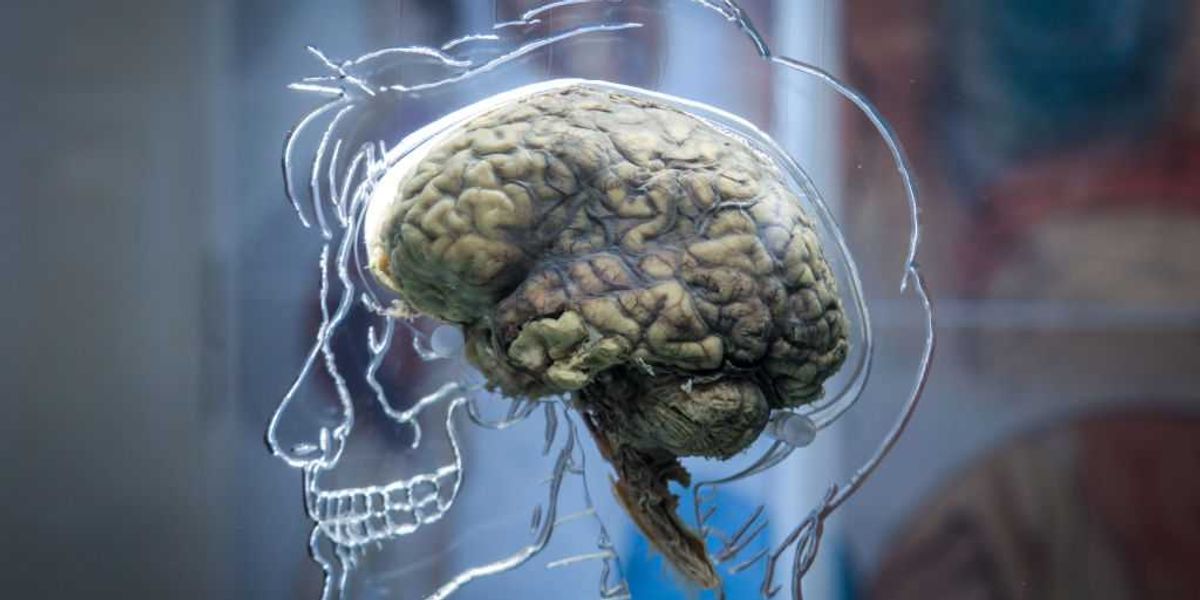
Several years ago, a team of researchers obtained numerous pig brains from a slaughterhouse and revived them off-site for experimentation purposes. That team has since moved up the food chain. Now it obtains human donors’ brains, restores their functions, and uses them to test experimental drugs.
Bexorg, a Connecticut-based biotech startup spun out of Yale University, boasts about having created a “platform that leverages the untouched potential of nature’s most complex and enduring mystery: the human brain.”
‘It’s a remarkable brain bank.’
Whereas other researchers might be limited to experimenting on lab-grown, human pseudo-brains or cell cultures, the team at Bexorg meddles with “full mature, intact, and isolated brains for days on end” with the stated aim of advancing brain disease therapies.
Unlike the company’s slick pitch, the reality appears to be something of a horror show. After all, the over 700 brains that have been subjected to experimentation at Bexorg so far were apparently far from inert.
Bexorg takes human brains from their newly deceased donors’ bodies, places them in what are effectively vats, and feeds them liters of blood substitute and other fluids that provide oxygen from an artificial lung and carry away waste to a fake kidney. The tubes that carry the sustaining fluids are connected to blood vessels in the brain via four plastic ports.
RELATED: Famed neuroscientist claims he’s disproven free will — but his peers say he failed miserably
RDB/Dukas/Universal Images Group/Getty Images
According to the peer-reviewed academic journal Science, the company’s proprietary life-support system BrainEx keeps the disembodied brains alive and preserves their key functions so that they can metabolize experimental drugs and react to other stimuli.
After roughly 24 hours in a state of drugged limbo, donors’ brains are cut up into hundreds of pieces for further study.
Although the brains are alive and reactive for the benefit of “drug discovery,” Bexorg CEO Zvonimir Vrselja has stated that “higher-level brain functions are not restored.”
According to a 2019 study in which Vrselja and other members of what became the Bexorg team used their technology to revive pig brains obtained from a food processing facility, “The observed restoration of molecular and cellular processes following 4h of global anoxia/ischemia should not be extrapolated to signify resurgence of normal brain function. Indeed, quite the opposite: at no point did we observe the kind of organized global electrical activity associated with awareness, perception, or other higher-order brain functions.”
To ensure against the re-emergence of consciousness among the subjects of their “wet-lab” experiments, researchers suppress the human brains’ electrical activity with anesthetics, specifically the drug propofol.
Propofol apparently causes brain activity to become unstable until the brain loses consciousness.
“The brains are already almost devoid of the coordinated neural firing necessary even for minimal consciousness,” Brenand Parent, a bioethicist from New York University Langone Health who sits on Bexorg’s board, told Science.
Despite the company’s reassurances and use of multiple measures to block neuronal activity, some have raised serious ethical concerns about Bexorg’s technology, which initially developed with the help of funding through the National Institutes of Health BRAIN Initiative. A source familiar told Blaze News that the company is not presently receiving NIH funding.
“This is brand-new, and there’s no kind of institutional oversight,” Yale bioethicist Stephen Latham told ScienceAlert in 2019 regarding the earlier experiments on pig brains.
“This is not animal research, because the brain comes to the researchers from an already dead animal,” continued Latham. “But if consciousness were somehow induced in the brain, we don’t have ethics committees … that are constituted to even think about how to do the kinds of trade-offs you do when you do research on human subjects or on animals.”
Vrselja claimed in a December 2025 study published in the Alzheimer’s Association’s journal, Alzheimer’s and Dementia, that the 5-year-old startup’s “perfusion‐based postmortem brain model can recapitulate the complexity of the brain at the cellular and systems level.”
The December study claimed further that “utilizing human disease brains as a preclinical model promises to substantially increase the probability of success in developing new therapies for AD.”
Bexorg did not respond to a request for comment from Blaze News.
Bruna Bellaver, a research assistant professor of psychiatry at the University of Pittsburgh, told Science that BrainEx is “a huge step up from mouse models.”
Bruce Car, the chief science officer at Biohaven, one of Bexorg’s collaborators, has used roughly 130 of the Bexorg-sustained brains to test drugs. Car told Science that one of the drugs, the intended use of which is to prevent toxic proteins from building up in the brain, didn’t perform as desired in a mouse, but worked in the disembodied human brains at a lower-than-expected dose. This apparently saved Biohaven a year of development.
“It’s a remarkable brain bank,” said MIT neuroscientist Li-Huei Tsai, who instead uses pseudo-brains grown from human stem cells.
Like Blaze News? Bypass the censors, sign up for our newsletters, and get stories like this direct to your inbox. Sign up here!
